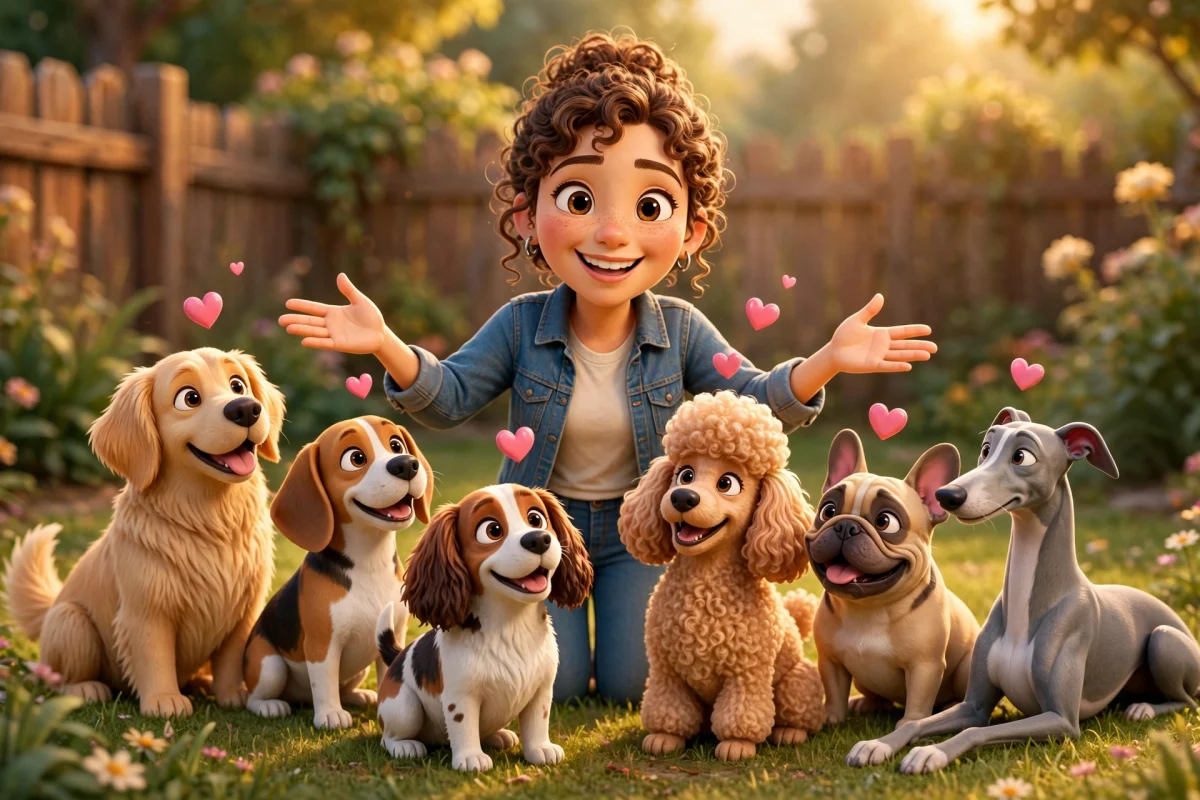
Getting your first dog is one of life’s great decisions — and one of the easiest to get wrong for the wrong reasons. Most first-timers choose with their eyes: the fluffy coat, the viral video, the breed their favorite celebrity owns. Then the reality of the breed’s actual needs shows up, and both the dog and the owner pay the price.
Here’s the good news: some breeds are genuinely more forgiving of beginner mistakes than others. They tend to be eager to please, adaptable, tolerant of inconsistent training, and resilient when a rookie owner fumbles the routine. That doesn’t mean they’re “easy” — every dog needs time, training, and commitment — but it means your learning curve won’t be punished as hard.
This list covers ten breeds that consistently work out well for first-time owners, with honest notes on what each one actually demands. If you want a shortcut, our free Breed Selector Quiz matches your lifestyle to the right breed in about two minutes — and our full guide on how to choose a dog breed walks through the decision step by step.
A quick note on what “beginner-friendly” actually means here. It doesn’t mean low-maintenance or “easy” — no dog is. It means forgiving: breeds that stay friendly when your timing is off, that don’t develop serious behavior problems from a few rookie mistakes, and that genuinely enjoy the training process instead of fighting it. A forgiving breed gives you room to learn. An unforgiving one grades you harshly from day one. Every breed below earned its spot by being the former.
1. Labrador Retriever
The Labrador has been America’s most popular dog breed for three decades running (the AKC’s Labrador Retriever page tells the full story), and there’s a reason beginners keep landing here: Labs are famously forgiving. They’re friendly with just about everyone, eager to learn, and remarkably tolerant of the inconsistent training that every first-time owner goes through.
Temperament: Outgoing, playful, and famously good-natured. Labs love people — all people — which makes them wonderful family dogs but hopeless guard dogs.
Training: One of the easiest breeds to train. They’re food-motivated and eager to please, so basic obedience usually clicks fast. The challenge isn’t teaching them; it’s channeling their enthusiasm. An untrained adolescent Lab is a 70-pound wrecking ball of joy.
Energy and grooming: High energy — Labs need real daily exercise (walks plus fetch, swimming, or play), not just a stroll around the block. Grooming is easy (weekly brushing), but they shed. A lot. Invest in a good vacuum now.
Best for: Active first-timers with time for daily exercise who want a social, trainable, endlessly enthusiastic companion.
2. Golden Retriever
If the Labrador is the enthusiastic best friend, the Golden is the gentle one. Goldens share the Lab’s trainability and people-loving nature with a slightly softer, more patient temperament — which is why they show up everywhere from family homes to therapy work.
Temperament: Friendly, patient, and devoted. Goldens are famously good with children and tend to be calm indoors once they’ve had their exercise.
Training: Excellent. Like Labs, they’re eager to please and highly food-motivated. They respond beautifully to positive training, and their desire to cooperate makes them one of the most beginner-friendly breeds to teach.
Energy and grooming: High energy with a real need for daily activity. The gorgeous coat is the trade-off: Goldens shed heavily and need brushing several times a week to prevent matting, especially behind the ears and on the feathering.
Best for: First-timers who want a gentle, affectionate family dog and don’t mind the shedding or the grooming commitment.
3. Cavalier King Charles Spaniel
The Cavalier is proof that a great first dog doesn’t have to be a big dog. These small spaniels were bred as companion dogs — literally designed to sit on laps — and they take to the job with total commitment.
Temperament: Affectionate, gentle, and adaptable. Cavaliers are happy almost anywhere: apartments, houses, quiet homes, busy families. They’re social butterflies that get along with kids, strangers, and other pets.
Training: Willing and responsive. They’re not the sharpest problem-solvers in the dog world, but they’re so eager to please that basic training goes smoothly. House training can take a little patience.
Energy and grooming: Moderate energy — a daily walk and some playtime is plenty. The silky coat needs brushing a few times a week to prevent tangles, particularly the feathering on ears and legs.
Best for: Apartment dwellers, calmer households, and first-timers who want an affectionate lapdog rather than an adventure partner.
4. Poodle (Miniature or Toy)
Forget the show-ring haircuts — underneath the fancy reputation, the Poodle is one of the smartest, most trainable breeds on earth. The Miniature and Toy sizes are ideal for beginners; the Standard is wonderful too but brings more size and energy to manage.
Temperament: Active, proud, and very smart. Poodles bond deeply with their people and are playful without being hyper. They can be a little sensitive — harsh corrections don’t suit them.
Training: Elite. Poodles are often ranked among the most trainable breeds, picking up commands fast and genuinely enjoying the learning process. A first-timer who wants to actually enjoy training will love a Poodle.
Energy and grooming: Moderate to high energy depending on size. The famous non-shedding curly coat is the big draw for allergy-conscious owners — but it demands professional grooming every 6–8 weeks plus regular brushing at home. Skip the grooming and you’ll have mats.
Best for: First-timers who want a smart, low-shedding dog and are ready to commit to the grooming schedule (and budget).
5. Bichon Frise
The Bichon is a small white cloud of cheerfulness. Bred as a companion dog, the Bichon exists for one purpose — to be delightful — and it rarely disappoints.
Temperament: Playful, gentle, and merry. Bichons are friendly with everyone, good with kids, and adaptable to apartments. They’re rarely shy and rarely aggressive — just happy.
Training: Smart and willing, though they can have a stubborn streak about house training. Consistent routine and patience win the day. They respond best to upbeat, reward-based training.
Energy and grooming: Moderate energy — daily play and short walks suffice. Like the Poodle, the curly low-shedding coat needs professional grooming every 4–6 weeks and regular brushing. This is a non-negotiable cost of the breed.
Best for: Apartment-dwelling first-timers who want a cheerful, low-shedding companion and can handle the grooming commitment.
6. Shih Tzu
The Shih Tzu was bred for Chinese royalty to be the ultimate lapdog, and centuries later the job description hasn’t changed. If your vision of dog ownership involves more cuddling than marathon running, pay attention.
Temperament: Affectionate, outgoing, and charming. Shih Tzus adore their people and are generally friendly with strangers and other pets. They have a playful streak but are fundamentally calm indoors.
Training: Moderately easy. They’re smart enough but can be a bit independent-minded — training works best when it’s fun and reward-heavy. House training sometimes takes persistence.
Energy and grooming: Low to moderate energy. Short daily walks and indoor play are plenty. The long, flowing coat is the commitment: daily brushing if kept long, or regular professional grooming if kept in a shorter “puppy cut” (which most pet owners choose).
Best for: Lower-energy first-timers and apartment dwellers who want a devoted companion dog and accept the grooming routine.
7. Cocker Spaniel
The Cocker Spaniel is the smallest of the sporting breeds — a merry, people-focused dog that splits the difference between an active companion and a cuddle buddy.
Temperament: Sweet, gentle, and eager to be near their people. Cockers are famously merry (it’s in the breed standard’s vocabulary) and do well with children and other dogs.
Training: Willing and responsive to positive methods. They’re sensitive dogs — harsh training shuts them down — but with encouragement they learn quickly and love having a job, even a small one.
Energy and grooming: Moderate energy; daily walks plus playtime keep them happy. The silky coat needs brushing several times a week, and those long ears need regular checking and cleaning.
Best for: First-timers who want a medium-sized, affectionate dog with a bit of sporting spirit but a manageable energy level.
8. French Bulldog
The French Bulldog is currently the AKC’s most popular breed in America (see the AKC’s French Bulldog page), and it’s easy to see why beginners love them: minimal exercise needs, minimal grooming, maximum personality.
Temperament: Playful, adaptable, and deeply charming. Frenchies are clownish companions that fit into almost any lifestyle. They’re good with kids and other pets and ask for little more than your company.
Training: Moderately easy — they’re smart but famously stubborn when something doesn’t interest them. Keep sessions short, fun, and treat-heavy. House training can test your patience.
Energy and grooming: Low energy. Short walks and indoor play are enough — and that’s a hard limit, not a suggestion: flat-faced breeds overheat easily and should never be exercised hard, especially in warm weather. Grooming is minimal (weekly wipe-down and brushing), but the skin folds need regular cleaning.
Best for: Apartment dwellers and lower-energy first-timers who want maximum companionship with minimal exercise demands — and who understand the breed’s heat sensitivity.
9. Boxer
The Boxer is the wild card on this list — higher energy than most beginner picks, but so people-oriented, trainable, and good with families that patient first-timers often do wonderfully with them.
Temperament: Fun-loving, loyal, and famously good with children. Boxers stay puppy-like well into adulthood — bouncy, goofy, and endlessly affectionate with their family.
Training: Smart and eager, but exuberant. A Boxer needs consistent training from day one because an untrained 70-pound adolescent that jumps on everyone is a problem. With structure, they learn fast and love working with their people.
Energy and grooming: High energy — Boxers need serious daily exercise and play. A bored Boxer is a destructive Boxer. Grooming is blissfully easy: short coat, minimal brushing, low shedding.
Best for: Active first-timers who can commit to daily exercise and consistent training, and want a goofy, devoted family dog.
10. Greyhound
The surprise entry — and the one experienced dog people love to recommend. Retired racing Greyhounds (and Greyhounds generally) are famously calm, gentle couch potatoes indoors despite their sprinting reputation.
Temperament: Gentle, quiet, and surprisingly lazy. Greyhounds are often described as “45-mph couch potatoes” — explosive on a run, comatose on the sofa. They’re typically good with kids and polite with strangers.
Training: Moderately easy. They’re sensitive and respond to gentle, positive training. Recall off-leash is the known weak point — their chase instinct is powerful, so secure areas only.
Energy and grooming: Lower than you’d ever guess. A daily walk and the occasional sprint in a fenced area is plenty. Grooming is minimal: short coat, little shedding, easy brushing.
Best for: First-timers who want a calm, low-maintenance, gentle dog — and anyone surprised that the fastest dog alive is also one of the laziest.
Breeds First-Timers Should Think Twice About
Honesty matters more than encouragement here. These are wonderful breeds — in the right hands. But they punish beginner mistakes harder than the breeds above, and first-timers should go in with eyes open:
- Border Collie: Arguably the smartest breed alive — and that brain needs hours of work daily. Without a job, that intelligence turns into anxiety and destruction. Not a casual pet.
- Siberian Husky: Stunning, athletic, and an escape artist with a legendary stubborn streak. They blow their coat dramatically, howl, and need serious exercise. Beautiful chaos for the unprepared.
- Belgian Malinois: A Ferrari of a dog — intense, driven, and demanding. Bred for police and military work, not for learning-on-the-job owners.
- Chow Chow: Aloof, strong-willed, and naturally wary of strangers. They need confident, experienced handling and early socialization done right.
- Akita: Loyal and dignified, but powerful, dominant, and often intolerant of other dogs. A breed that rewards experience and punishes hesitation.
None of these are “bad” dogs. But if you’re choosing your first dog, the ten breeds above give you a much wider margin for error while you’re learning.
Frequently Asked Questions
What’s the single easiest dog breed for a first-time owner?
There’s no universal answer, but the Cavalier King Charles Spaniel and the Labrador Retriever are the two most commonly recommended. Cavaliers suit calmer, smaller-space lifestyles; Labs suit active households. Our Breed Selector Quiz can narrow it to your situation in two minutes.
Are rescue or mixed-breed dogs good for first-time owners?
Often excellent. Shelters do behavioral assessments and can match you with a dog whose temperament is already known — which removes a lot of the puppy guesswork. Many mixed-breeds combine the easygoing traits of the breeds above. Ask the shelter staff what they recommend for a beginner; they do this matching every day.
Should a first-time owner get a puppy or an adult dog?
Puppies are adorable and exhausting — they need house training, chew training, and near-constant supervision. An adult dog (1–3 years) from a breeder or rescue often comes with basic training and a known personality, which is genuinely easier for most beginners. There’s no shame in skipping the puppy stage.
Small breed or large breed for a beginner?
It depends on your space and strength more than your experience. Small breeds suit apartments and are physically easier to manage; large breeds like Labs and Goldens are often calmer and more forgiving in temperament. Pick based on your living situation and how much dog you can comfortably handle on a leash.
How much daily exercise does a beginner-friendly breed actually need?
It varies widely even on this list: a French Bulldog or Cavalier is happy with 20–30 minutes, while a Labrador, Boxer, or Golden needs 60+ minutes of real activity. Be honest about what you’ll actually do every day — not what you hope you’ll do — and choose accordingly.
I work full-time. Can I still get a dog?
Yes, with planning. Adult dogs handle alone time better than puppies. You’ll need a midday break (dog walker, neighbor, or coming home at lunch) for the first months, and breeds with lower energy and more independence adapt best. Don’t get a high-energy puppy and leave it alone 10 hours a day — that’s how problem behaviors start.
The Bottom Line
The “best” breed for a first-time owner isn’t the most popular one or the cutest one — it’s the one whose needs line up with the life you actually live. An honest look at your energy, space, schedule, and grooming tolerance will narrow the field fast.
Start with the ten breeds above as your shortlist, dig into the ones that fit your situation (the AKC’s breed pages at akc.org are a solid next stop for detailed profiles), and if you want the decision made for you, take our free Breed Selector Quiz. For the full step-by-step process, read our guide on how to choose a dog breed.
And remember: the best dog for a first-time owner is ultimately the one you’re truly ready for. Choose honestly, commit fully, and you’ll wonder why you waited so long.
One last piece of practical advice: whatever breed you choose, the first two weeks set the tone. Keep things calm, establish a consistent routine for feeding, walks, and sleep, and start basic training from day one — even just name recognition and “sit.” Dogs thrive on predictability, and a predictable first fortnight builds the trust that makes everything after it easier.
🛠️ Try These Free Tools
- Breed Selector Quiz — Find breeds that fit your lifestyle
- Puppy Cost Estimator — Estimate first-year costs

Muhammad Anas Bukhari
Founder of PupTriage — researching and writing practical, easy-to-follow dog-care guides for everyday dog parents.
More about us →